placed at the head of the path
Mum — you taught me how to prune a rose, write a thank-you note, and tell the difference between a kind silence and a cold one. I have used all three this week. Walk well.
— Iain SinclairSon
Heartfelt
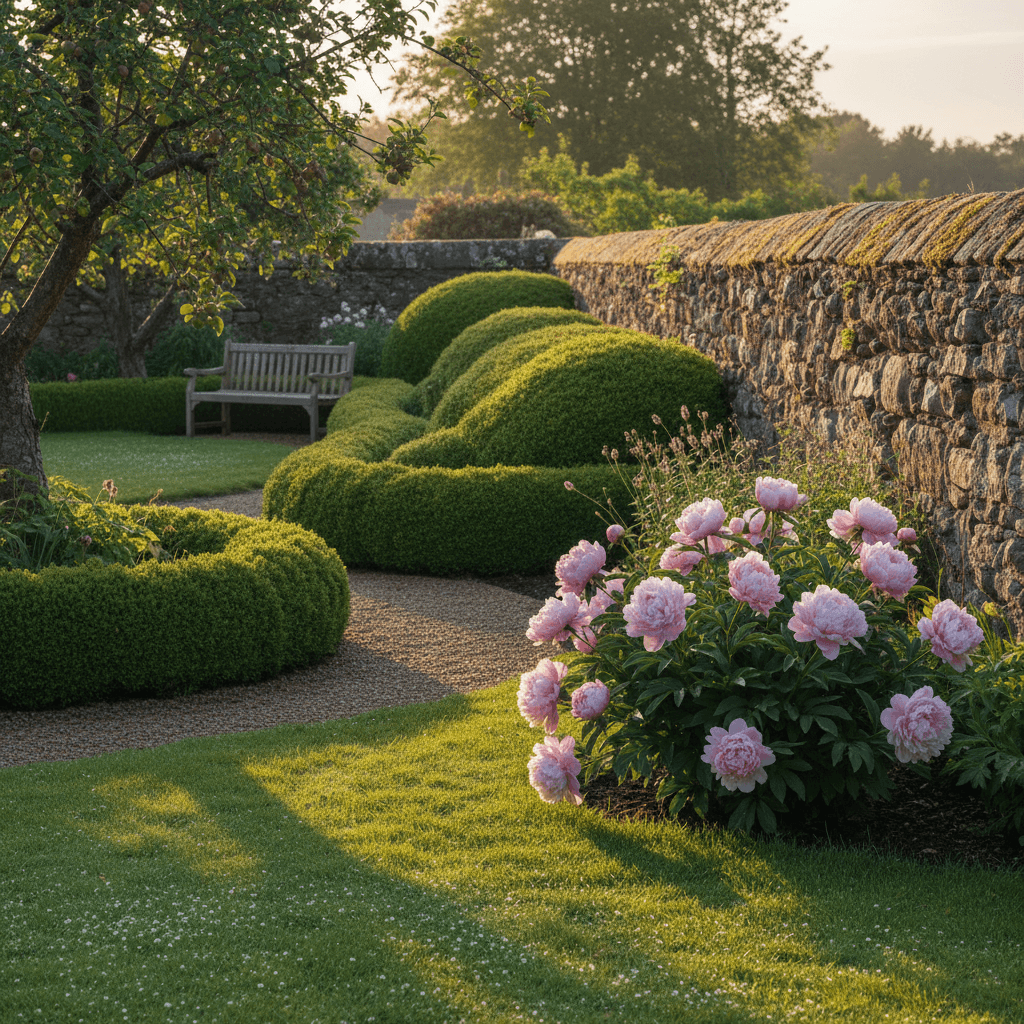
For a life quietly tended, and kept.
“A keeper of gardens and of confidences — the quietest of the loud, the gentlest of the brave.”
11 remembrances · placed quietly, in the order they arrived.
Mum — you taught me how to prune a rose, write a thank-you note, and tell the difference between a kind silence and a cold one. I have used all three this week. Walk well.
Granny. The peonies on the kitchen table this morning came up exactly on time. I think you arranged it. I am twenty-six and I miss you like I am six. Thank you for every cup of tea, every walk to the burn, every "let's just see what the weather does."
We were eleven when we met at Stirling High and we were never not friends after that. Sixty-eight years. She was the only person I could ring at midnight without having to apologise first. I will, for a while, keep ringing.
Margaret was my supervisor at the Royal Infirmary in 1992. On my second week she said, "you are going to be a wonderful doctor, but only if you stop apologising for taking up space." I have framed that sentence. It hangs above my desk in Lagos. Thirty-four years of patients have benefitted from her telling me, once, to stand up straight.
For our gran — who let us pick the strawberries before they were ready, who never told on us for it, and who taught us the names of every wildflower on the back path. We will teach our own children, when they come. Promise.
Margaret came to the wee Sunday service for forty-one years. She sat in the third pew on the left. She listened more than she spoke, which, in a kirk, is high praise. She was, as the old word goes, gentle — strong enough to choose to be gentle. We are the poorer for her absence and the richer for the years she walked among us.
I was her nurse for the last six months. I have done this work for nineteen years and I have rarely been thanked the way she thanked me — not loudly, just exactly. The morning she went, the window was open and a blackbird sat on the sill for the better part of an hour. I know what I saw.
She was my sister-in-law for fifty-one years and she put up with me, the football, and the dog. Sainted, frankly. I will miss her more than I have words for. She knew, I think. She always knew.
Margaret was my landlady when I came to Stirling as a PhD student in 2004, knowing no one. She gave me my own key on the first day. She left a list on the kitchen counter that read, in her handwriting: "Bread bin. Milkman comes Wednesday. The cat is called Maisie and she is in charge." I lived under her roof for two years. I have not stopped being her son in any practical sense for the twenty years since.
For nineteen years she chaired the spring show and never once let us know what a thankless task it was. We are still finding her labels, in pencil, on the back of seed packets in the hall cupboard. Nothing she planted has yet failed to come up. We do not expect that to change.
For my mother-in-law, who welcomed me into the family in 1989 with a slice of fruitcake and the words, "Iain is going to be tricky in his sixties. I want you to know now." He is fifty-eight. She was right. I have a year to prepare. Thank you, Margaret — for everything, but especially for that.
To everyone who knew her —
Thank you for coming, in whatever way you have come. By foot to the chapel in Stirling, by car down the M9, by quiet message left on this page late at night when you could not sleep. She would have read each one carefully, with her glasses on the end of her nose, and she would have said — typically — that it was all far too much fuss.
Mum's garden is what she left us, in every sense of the word. The literal one is at the cottage, and we are keeping it on. The rose she planted the year Dad died is doing the best it ever has, which feels about right. The other gardens — the ones she tended in each of us — are also doing well, we think. We are trying to keep them on too.
If you would like to plant something in your own garden, in her name, may we suggest a peony. She loved them unreasonably. They are slow to start, and they always come back.
With our love, and our quiet thanks — The family
“Plant the peony anyway. She'll find it.”
Share this wall